
Publish on : 30/09/2026
Categories : Manufacturers and designers
 |
Where it all began: the Johnston factory
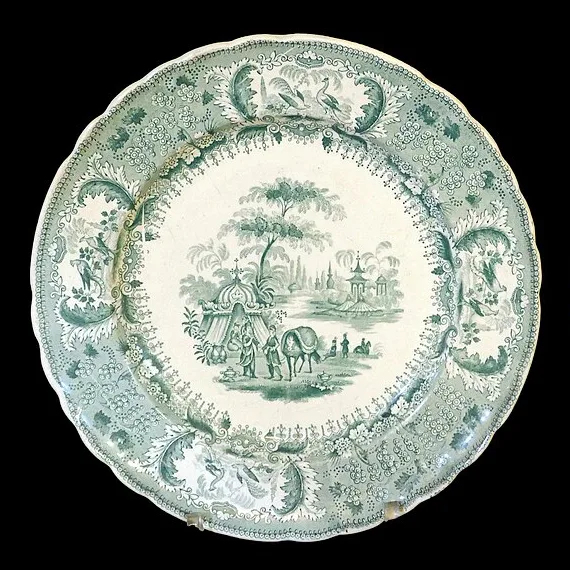
Before it was called Vieillard, the Bacalan factory belonged to David Johnston, a well-known man of Irish origin who lived in Bordeaux. He was an important figure in the city and served as its mayor from 1838 to 1842. Under his leadership, the Bacalan pottery grew and laid the foundations for what would become, a few decades later, one of the most famous factories in France.
 |
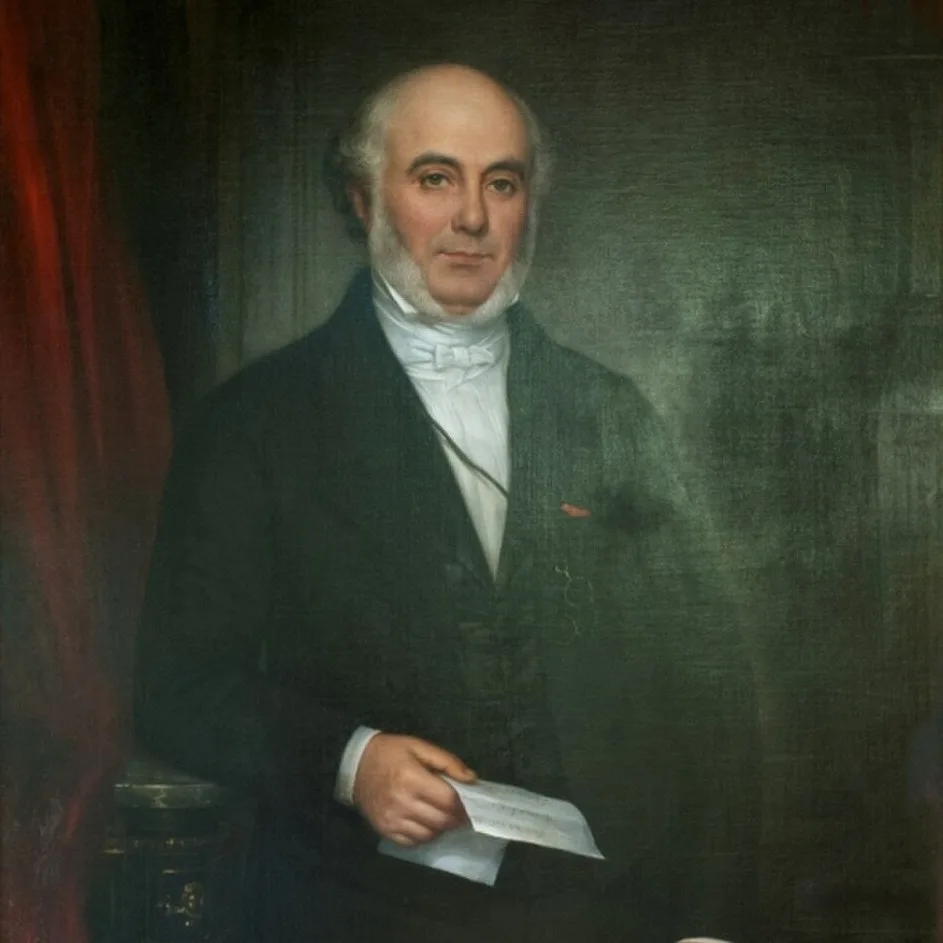 |
The Johnston factory owed much of its success to Pierre-Honoré Boudon de Saint-Amans, a true pioneer in France when it came to English methods of making fine earthenware. He knew British production very well, and he helped make Bacalan a workshop with the most modern techniques of its time. In 1840, the factory hired Jules Vieillard, who was already respected in the world of ceramics. At first, he ran the making and selling of the products, but his role soon grew to include the administration and finances of the business. This steady rise turned out to be decisive: in 1845, Jules Vieillard bought the factory from David Johnston and officially became its head.
The rise of the Vieillard factory
Today, the Vieillard factory is seen as one of the finest and most famous factories of the 19th century. Although it only produced for about fifty years, it stood out for the steady quality of its work and for its new and original designs, both in style and in technique.
As early as the 1850s, the factory's skill was noticed. Even Alexandre Brongniart, the director of the Royal Sèvres Manufactory, praised the quality of its work. Awards soon followed: a gold medal at the Exposition philomathique in 1854, a first-class medal the next year at the Paris Universal Exhibition, and another prize at the 1878 exhibition.
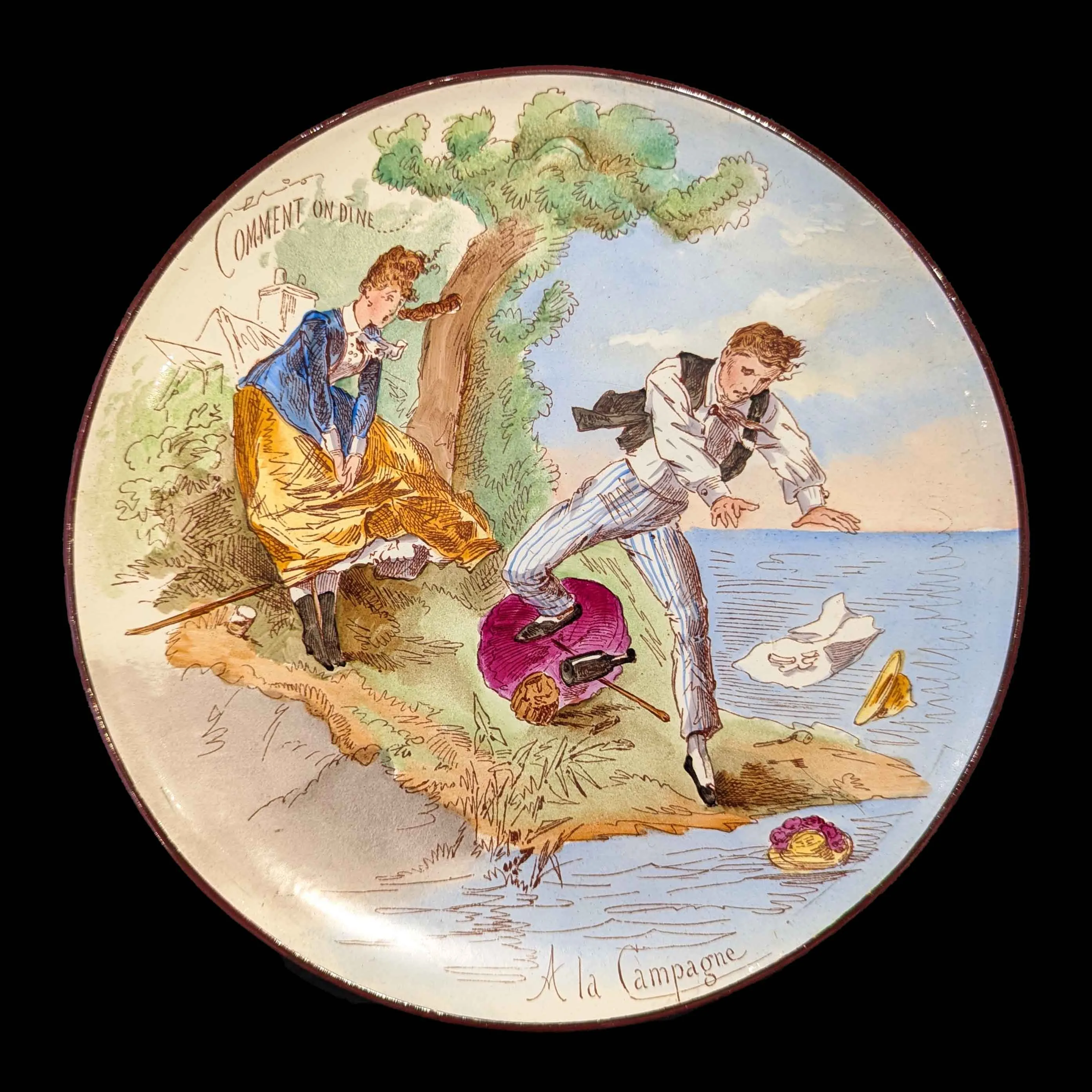 |
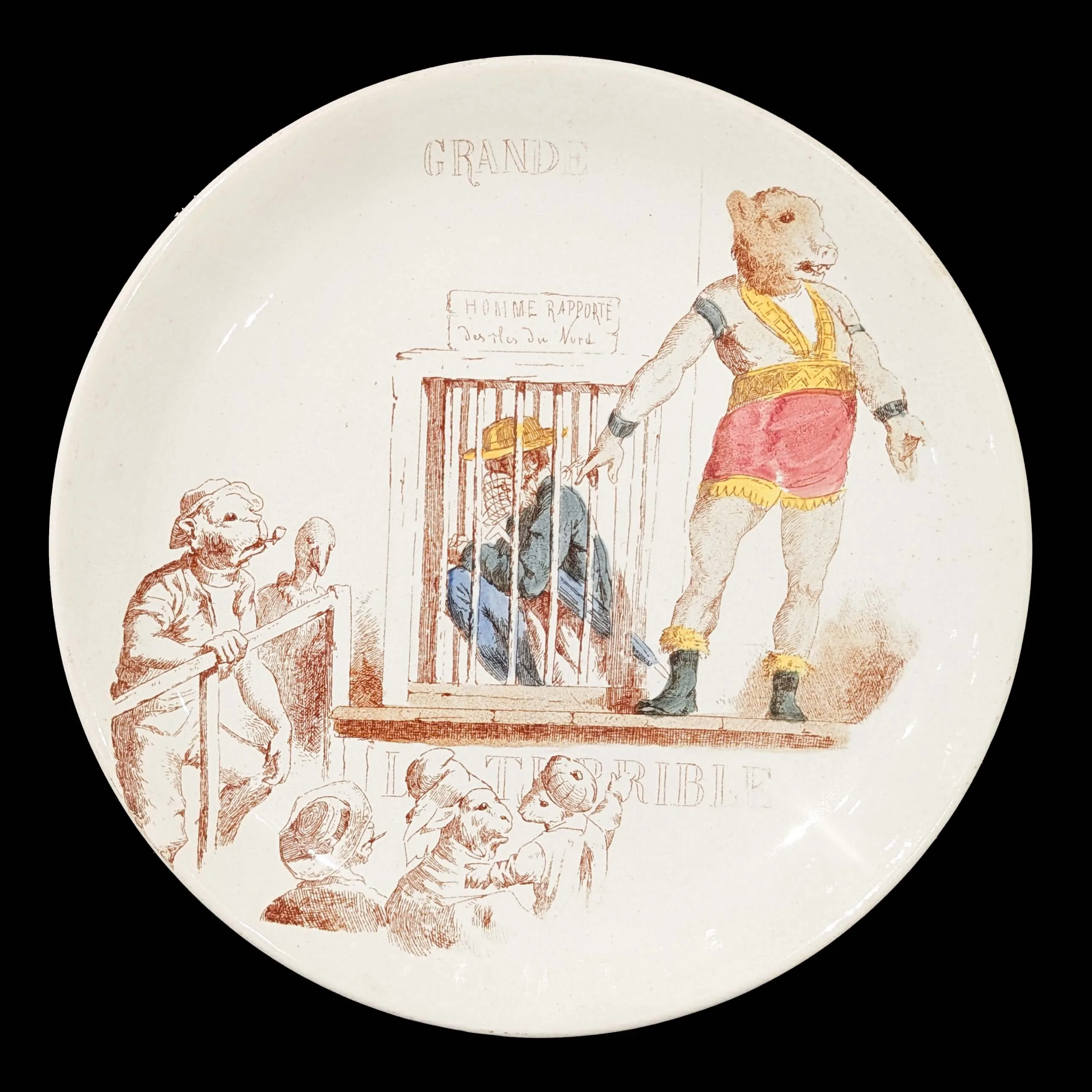
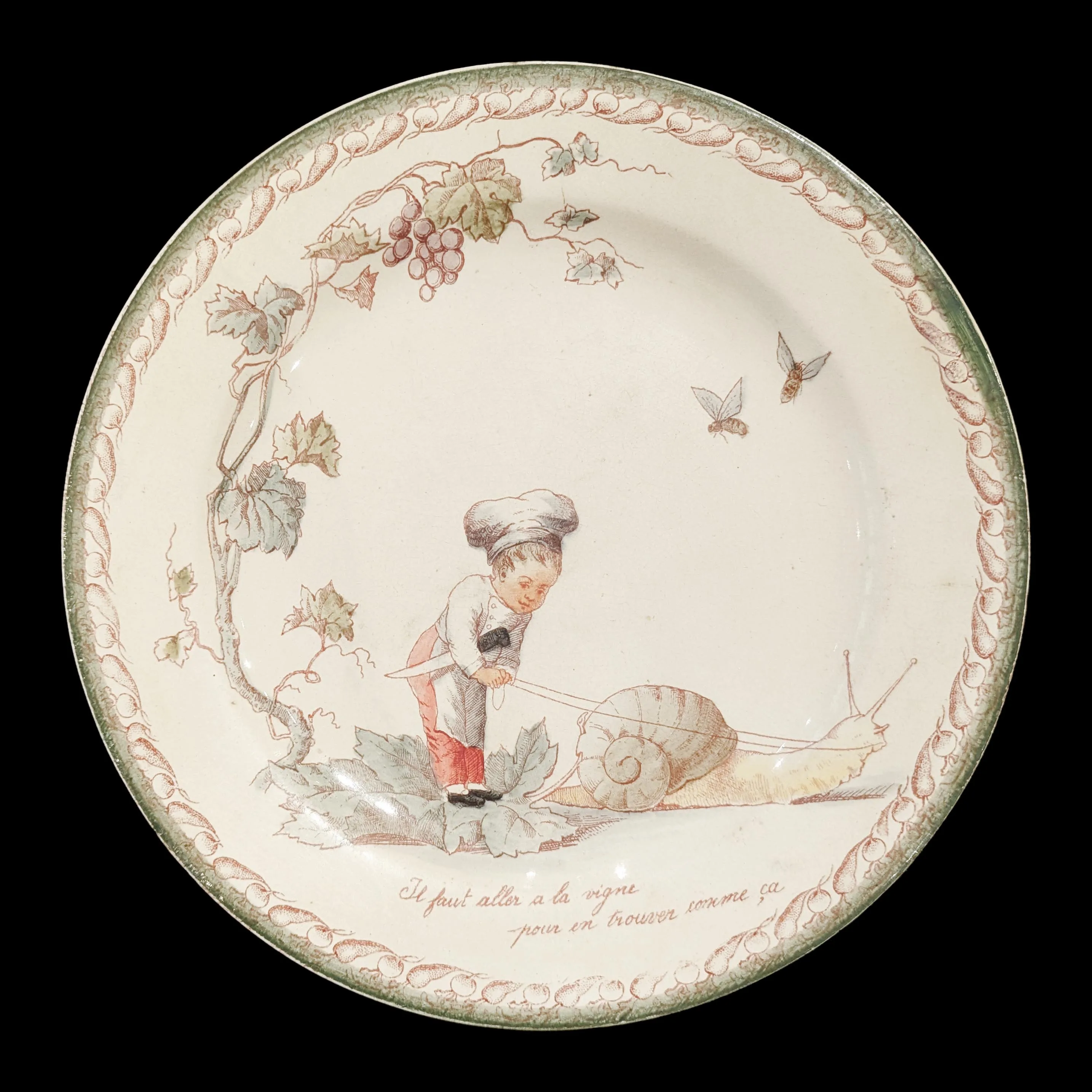
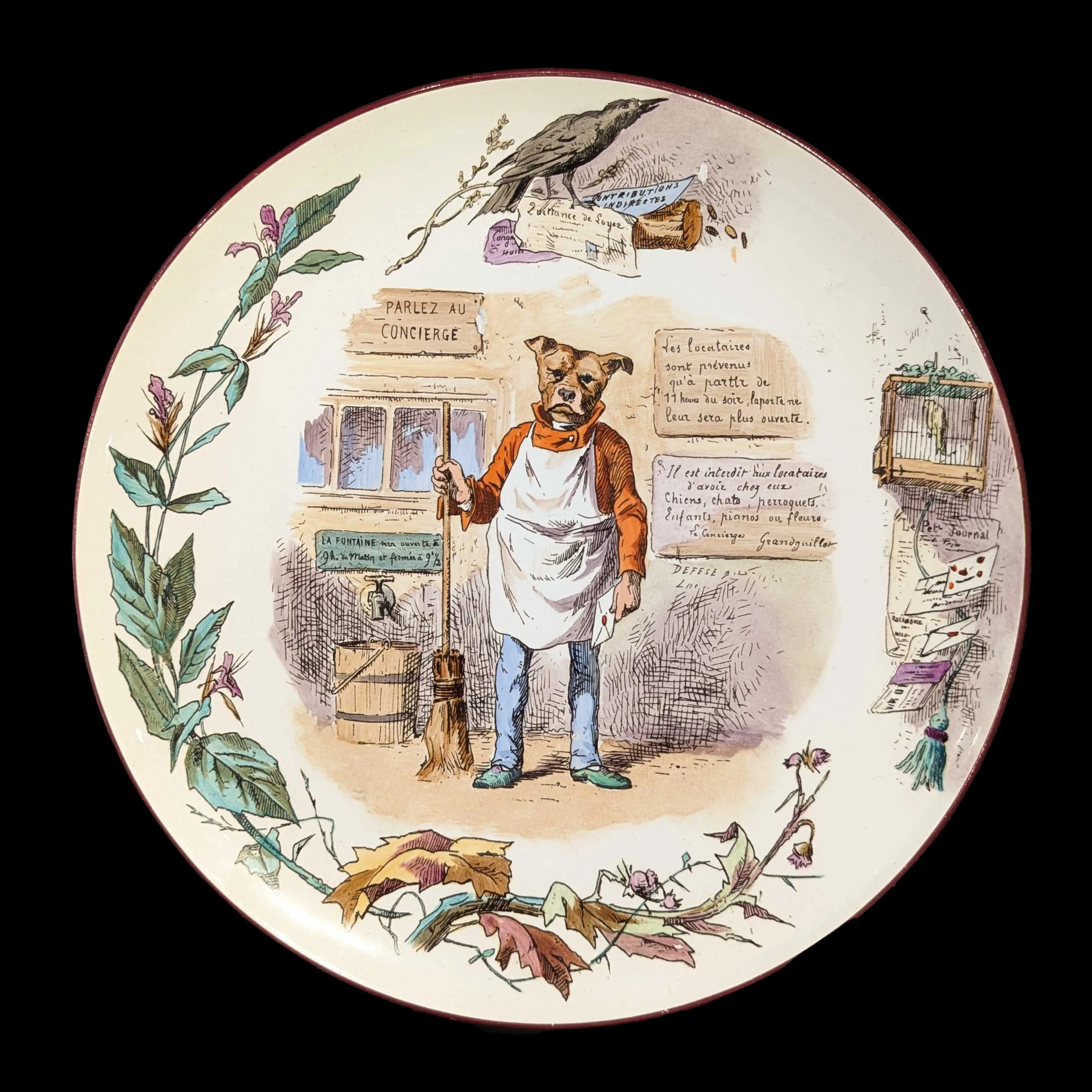
Still shaped by English influence, Vieillard's output was very varied. It included plates with pictures and stories, puzzle plates (with rebus riddles), and funny designs such as the famous plates showing little kitchen boys, as well as the well-known set called "The World Turned Upside Down." This series was inspired by Grandville's book Scenes from the Private and Public Life of Animals. It shows animals acting like people in everyday situations, with a humor that was both funny and satirical, and very popular with the middle-class public of the time.
 |
 |
 |
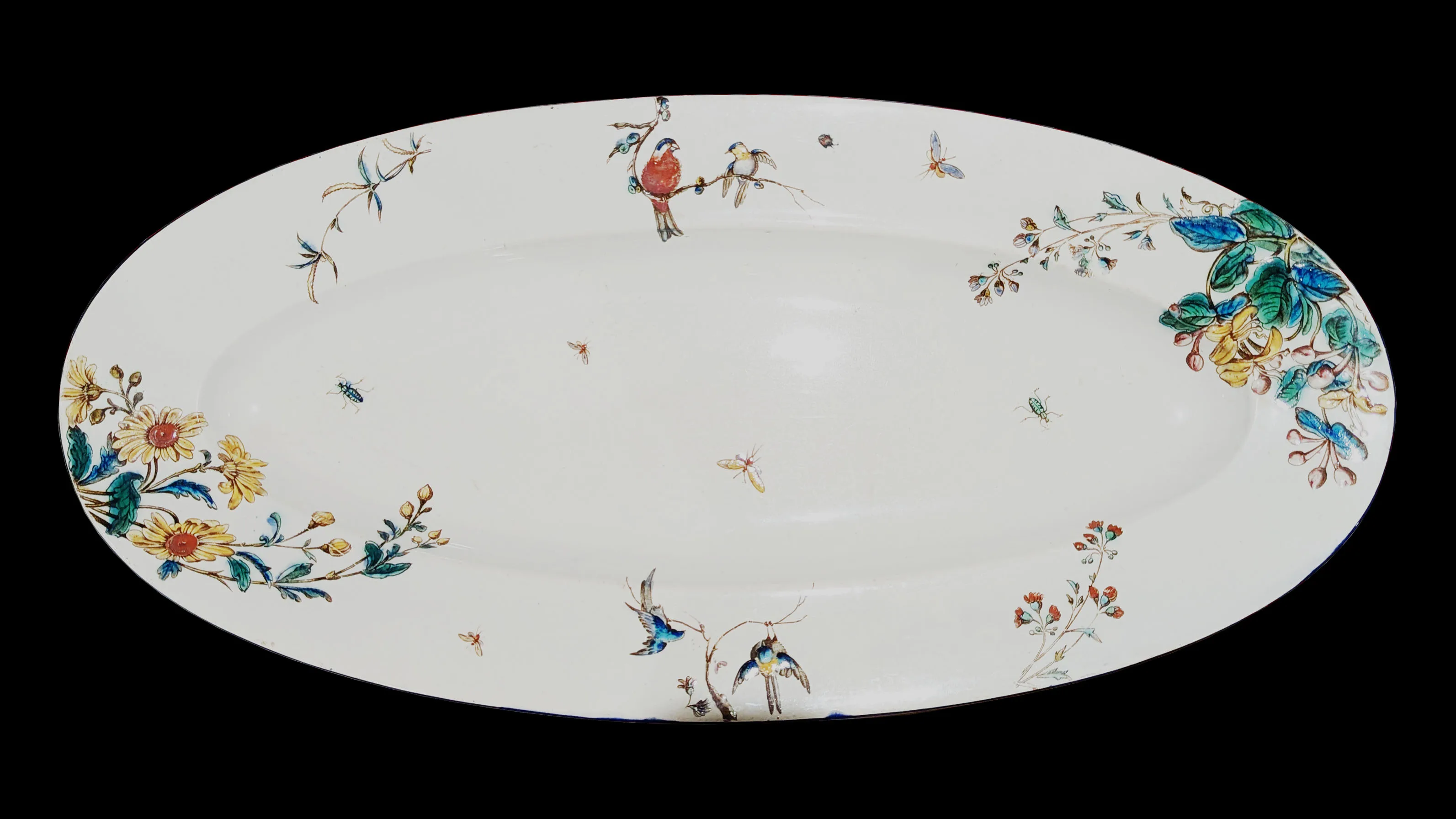
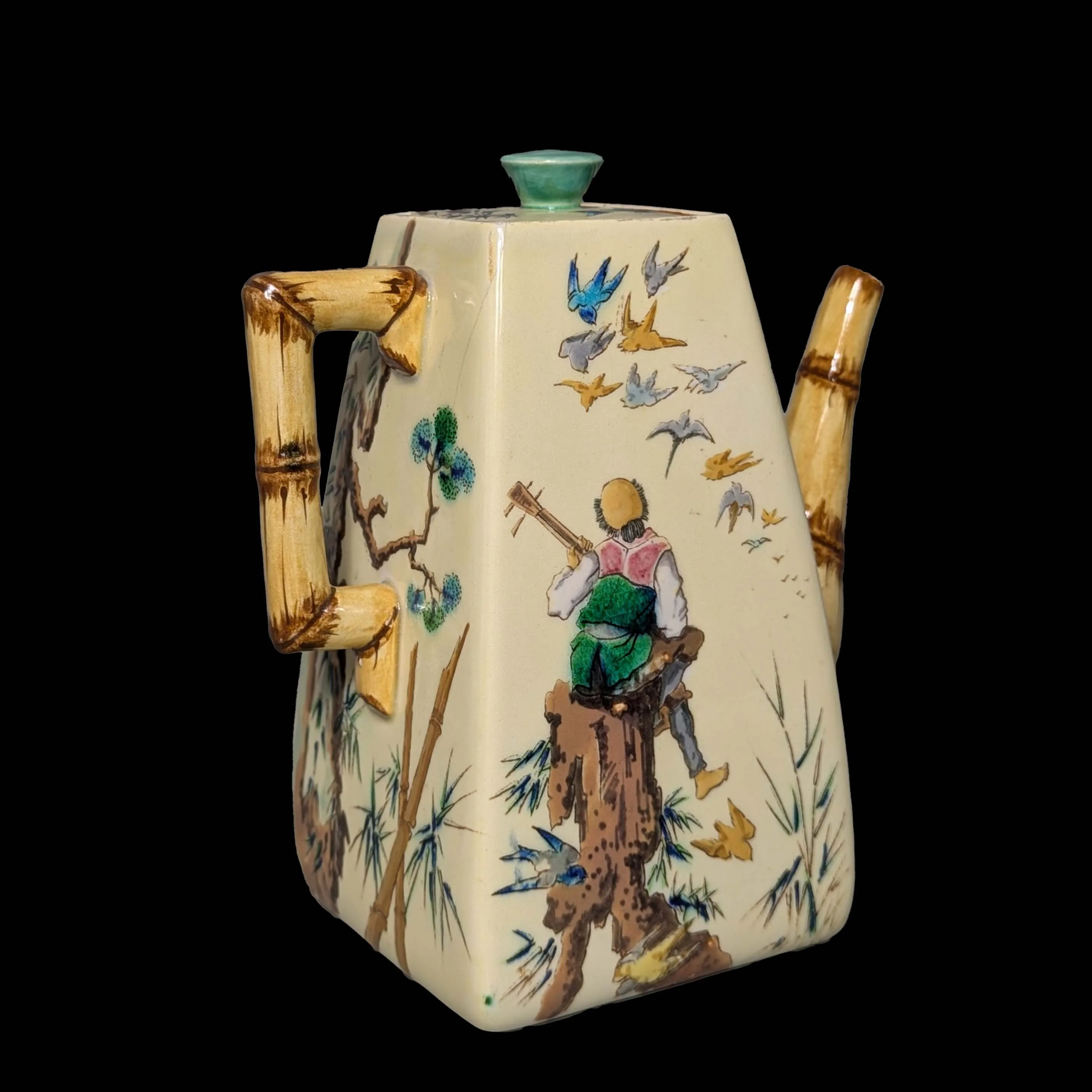
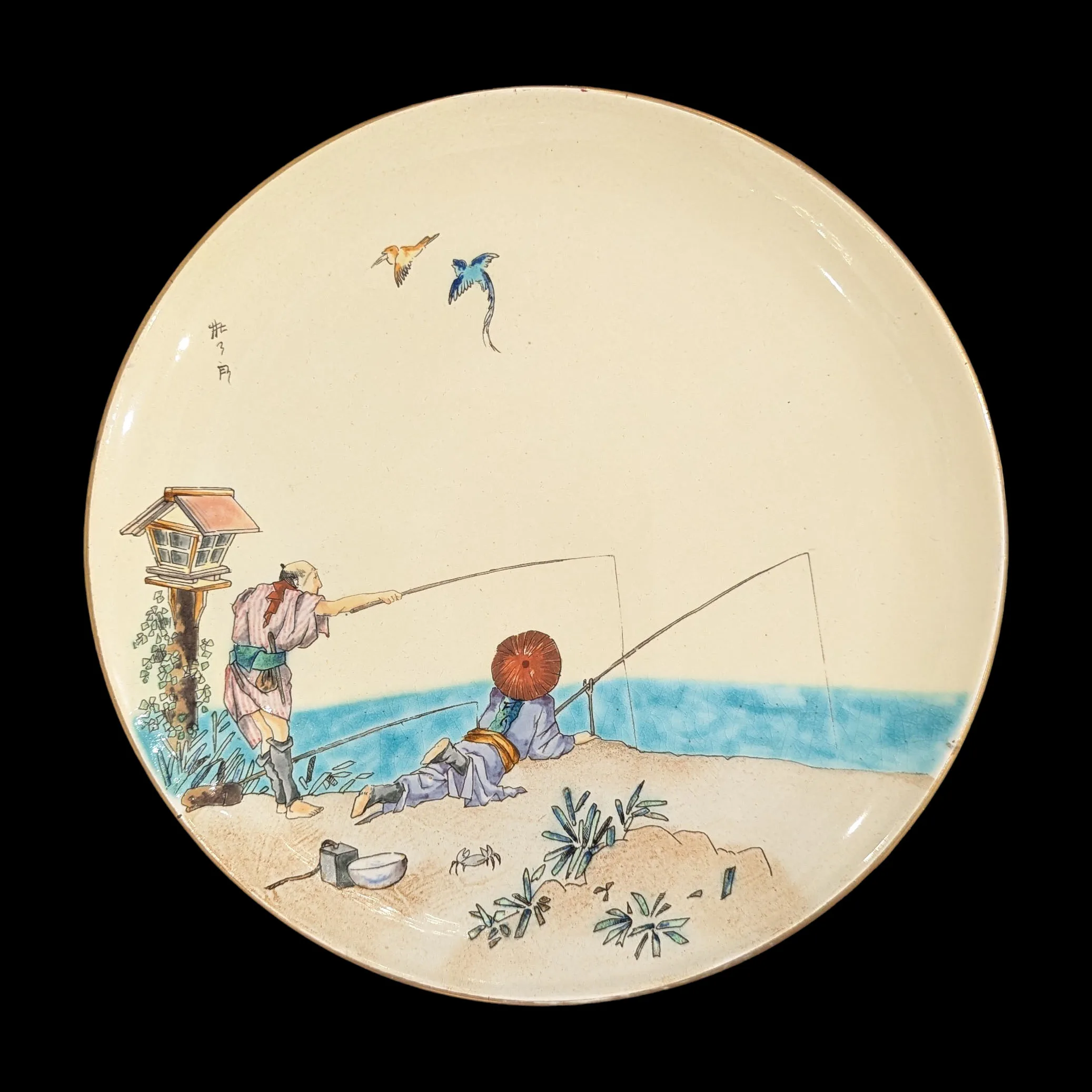
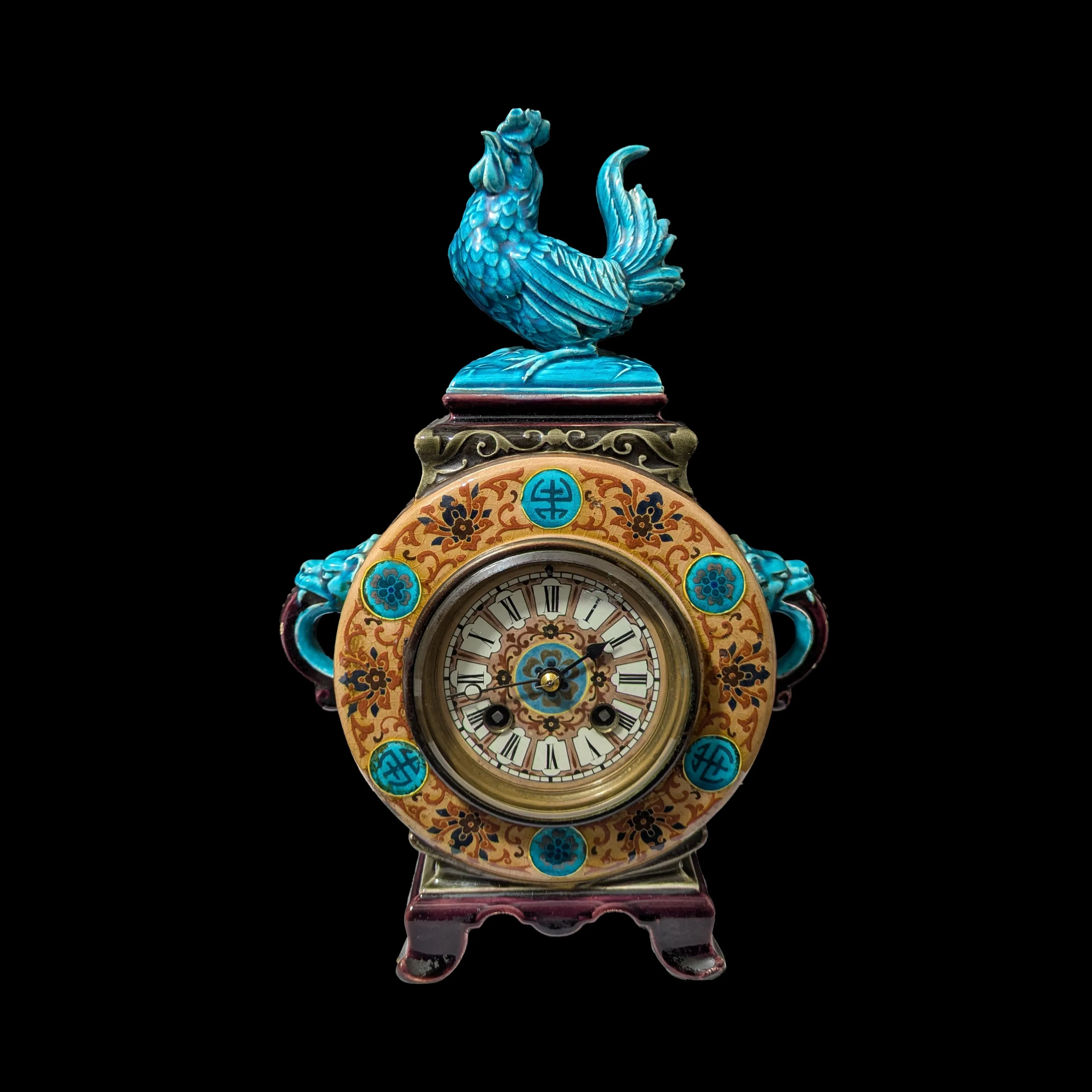
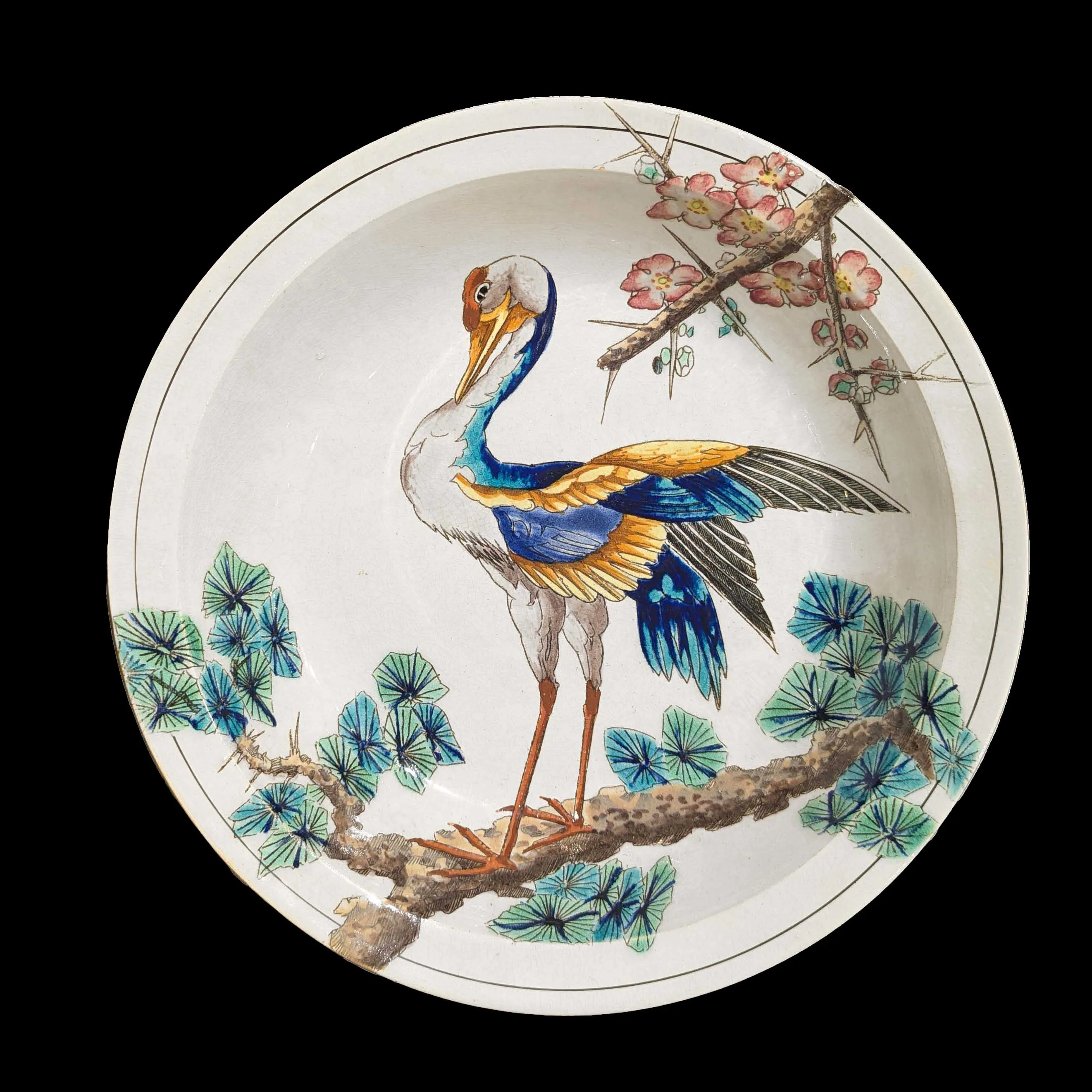
The factory found new energy when Amédée de Caranza arrived as artistic director, shortly before the 1878 Universal Exhibition, which was a great triumph for Japanese-style art in Europe. Caranza brought a very original creativity, drawing on Turkish and Japanese ceramics, and this is a big part of why Vieillard is so famous today. As well as rich designs, often with a touch of humor, he developed new techniques, such as raised enamel, which can be seen in the famous "Large Birds" set. Caranza left the factory in 1886. In his eight years there, he completely renewed the factory's range of designs, mixing Japanese and Oriental styles that were very fashionable at the time.
 |
 |
 |
At its peak, around 1878, Vieillard & Cie employed about 1,200 to 1,300 workers and ranked third among the most respected French factories, behind Sarreguemines and Creil & Montereau. After Caranza left, the factory finally closed in 1895, ending half a century of production that was short but outstanding.
 |